Saturday, June 13, 2015

If it's good enough for Mark Zuckerberg: On Immunity

On Immunity: An Innoculation, Eula Biss


Fast Facts
  • I found this book through Mark Zuckerberg's New Years Resolution project, A Year of Books. Zuckerberg chooses a new book every two weeks and hosts related online discussions, with some of the selections picked from relative obscurity (quite a windfall for the authors.) I figured, if it's good enough for Mark Zuckerberg...
  • On the New York Times Book Review's 10 Best Books of 2014
  • 216 pages
  • An exploration of vaccination - where our cultural attitudes about it come from, how vaccines are regulated and created, refutation of that horrible and unfounded article on a link to autism, how Biss approached vaccination as a new mother, and more
  • Beautiful writing on an important subject, made as interesting to the masses as possible
  • I'll admit, it felt like a bit of a slog at times (particularly when she went on and on about vampires), until suddenly the book ended when Kindle said it was 75% complete - a full quarter of On Immunity devoted to endnotes I will never read!
You Can't Live in a Bubble

There is great appeal to believing that, through your life choices, your body or family or community can be natural and pure and protected from malicious outside forces.  But this belief can be dangerous and often selfish - especially when coupled with possessing a tiny bit of unverified information.

We want to live in a closed system, but Biss' main message is that we are all connected, despite the illusion of isolationism.  As Biss' father, a physician, tells her, vaccination works by enlisting a majority in the protection of a minority.  The choices you make impact your fellow human beings, and vice versa.

One of Biss' most powerful anecdotes is about the birth of her son.  After giving birth without any medical intervention or painkillers or an IV, her uterus inverted and she needed an emergency blood transfusion.  We are part of one another's lives through our blood transfusions, our shared environment, our countless interactions, and the herd immunity our community members' vaccinations provide for us.  The boundaries we work hard to create in our minds are, in reality, permeable.

A few memorable facts:
  • Part of the controversy surrounding vaccination is a product of luxury.  Unvaccinated children are more likely to be white, have an older married mother with a college education, and to live in a household with an income of $75,000 or more.  Wealthier countries have the luxury of entertaining fears the rest of the world cannot afford.
  • Environmentalist manifesto Silent Spring warned that the pesticide DDT was a widespread cause of cancer, a hypothesis that was not supported by decades of research that followed its publication.  But, because DDT became a pariah in the public mind, its use was widely banned, leading to a resurgence of mosquitos, malaria, and the deaths of one child in twenty in Africa.
  • The public harbors similar fears about formaldehyde, though it is in automobile exhaust and cigarette smoke and paper bags and paper towels and gas stoves and fireplaces, and though it is a product of our bodies, essential to our metabolism, and in higher concentration in our systems than in the amount we receive through vaccination.
  • Breast milk has paint thinner, dry-cleaning fluid, flame retardants, pesticides, and rocket fuel - most in microscopic amounts.  If it were sold at the convenience store, some stock would exceed federal food-safety levels for DDT residue and PCBs.
  • The chicken pox can lead to infection with staph and Group A strep (flesh-eating bacteria), as well as pneumonia and encephalitis.  Once you are infected with chicken pox, the varicella virus never leaves your body and can return as painful shingles, and can cause strokes and paralysis.  Parents hold chicken pox parties for their children and pass out lollipops licked by sick children because experiencing the "real" or "natural" version feels comforting and safe on a basic level, despite the greater actual safety of the chicken pox vaccine.
Read It Because It's Good for You

I seem to have been reading a lot of thrillers and essay collections and yes, some junk food lately, and wanted to educate (punish?) myself with more non-fiction.  I bought On Immunity first, and read it (from a distance) with my brilliant pharmacist friend (though I think we've spent more time re-hashing Game of Thrones.  Can't blame us.)

I've also put H is for Hawk on the Kindle shelf, after reading an insanely glowing New Yorker review, and This Changes Everything, a book on climate change (which I feel even more morally obligated to read as an environmental lawyer.)  Suddenly it seems like I need a good fiction recommendation, or this is going to feel too much like work!

I would definitely recommend On Immunity, particularly to new parents and people who aren't necessarily science-minded but who would like an easy-to-approach, interesting primer.  Biss approaches the subject of immunity from so many different vantage points, sociological and scientific and cultural and literary and personal, so that you never nod off the way you otherwise might.  It's certainly good fodder for the playground, when a "protective" mother tells you she doesn't want to give Little Timmy his flu vaccine.

Saturday, May 16, 2015

Like John Grisham, Only Better: A Good Killing

A Good Killing, Allison Leotta


Fast Facts
  • A Good Killing is the fourth installment in an insanely addictive series
    • Law of Attraction is the debut Anna Curtis novel, is a riveting introduction to Anna and her job as a domestic violence and sex crimes prosecutor
    • Discretion, probably tied with A Good Killing for my favorite, involving politicians, murder and a high-end prostitution ring - who can resist?
    • Speak of the Devil, in which Anna hangs out with cool FBI agents and both humanizes and takes down the scary MS-13 gang
  • You don't have to have read the first three books to get started on this one, but you do have to read the first three books, because they're fantastic
  • Anna Curtis takes a leave of absence from her prosecutor job in DC to defend her younger sister from a murder charge in her Michigan hometown
  • Put on Chicago's Cell Block Tango "He Had it Comin'" as your accompanying reading soundtrack
Background

Christmas only comes once a year - and for the past four years, my personal Christmas has come when Allison Leotta's new book is finally published and hits my Kindle shelf.  I interned for Ali at the U.S. Attorney's Office sex crimes and domestic violence unit - it was my first legal job, when I was in college.  She was a terrific attorney to watch in action - when she spoke, you could hear a pin drop in the courtroom - just a really compassionate, effective advocate.  And now, she's also the bestselling author of a series of awesome legal crime thrillers.  (If only being your personal superhero's intern could be a permanent job - I would wheel around her lit bag for eternity!)

The protagonist in this series is Anna Curtis, a sex crimes prosecutor in DC who's terrific at her job, blond and beautiful, and in the business of having adventures and misadventures as she takes on big cases and has sexy affairs.  

Murder in Detroit and Michigan's Unhealthy Obsession with Football

(Yes, I know - it sounds like nonfiction to me, too.)

In this installment, after some heartbreak and in response to a well-timed phone call, Anna returns from DC to her Michigan hometown to defend her sister against a charge that she's murdered the town's beloved high school football coach.  

The novel is driven forward like a high-speed train by terrific pacing; a point-of-view shift between Anna and her sister Jody; the overarching mystery of whether Jody did it, and if so, will she get away with it; and the ever-important question - is Anna going to hook up with the sexiest war veteran-turned-urban farmer in literature?

As a Midwesterner who moved to the big city, I can relate to some of the attitude Anna gets when she comes home; her fleeting feeling of not quite belonging in either place; and her nostalgia and hope for a down-and-out community, rebuilding itself Brooklyn-style.

I was also engaged by Anna as she first seems to truly question the establishment and the judicial system in perhaps a surprising way, given her chosen life's work.  Part of working within the system means inherently believing that the system is fundamentally good, fundamentally helpful, fundamentally protective of those in the right and punishing of those in the wrong.  

But of course, human beings, their actions and their bureaucracies are often not so easily categorized, and some flexibility is both necessary and idealistic.  It would be nice to see that kind of flexibility exist more frequently in reality, and not just in highly entertaining fiction.

So Good, I Wish She'd Write Even Faster!!

As with the first three books, I was completely hooked within the first few pages - wishing my commute was longer, wishing I'd taken a sick day from work to book-binge, and completely ignoring my husband and abdicating all household chores till I was done. ("Why don't you savor it?" Ronny asked. A thinly-veiled and ultimately futile plea to do the dishes.)


I've wondered after each book - am I going to get tired of Anna? Given some unfinished business in A Good Killing, and my (typical) eagerness to get the new installment immediately, the answer is decidedly no.

Tuesday, April 21, 2015

I wish people talked like this a lot more: The Unspeakable

The Unspeakable: and Other Subjects of Discussion, Meghan Daum


Fast Facts
  • 10 absorbing essays on a range of subjects
  • Brutally and bravely honest, Daum's essays lay bare some of her most personal experiences, and her real reactions to them, in her effort to avoid platitudes and preassigned emotional responses
  • Topics include "death, dogs, romance, children, lack of children, Joni Mitchell, and cream-of-mushroom-soup casserole, to name a few"
  • Daum also edited a collection of essays by other writers, titled "Shallow, Selfish and Self-Absorbed: Sixteen Writers on the Decision Not to Have Kids"
  • The author has been called the Joan Didion of her generation - hard to get higher praise than that
  • Worth a read, and then a second read (well - maybe not the Joni Mitchell essay, unless you're a fan)
  • 256 pages
The Biggest Cry Comes First

The essay in Daum's courageous collection The Unspeakable that affected me the most was the very first one, "Matricide", in which she recounts her mother's death from cancer.  I read and watched Cheryl Strayed's autobiographical book and movie Wild in the past couple months, and this was another book that begins with a young woman experiencing her mother's cancer death.  

While I sob-cried my way through both essays, Daum's was the real sucker punch.  Strayed's mother is portrayed in glowing Laura Dern-perfection, bathed in light, singing songs, whispering to horses, escaping and elevating herself above hardships with a smile.  Meghan Daum's relationship with her mother, and her mother's relationship with Daum's grandmother, and Daum's reaction to her mother's illness and death, certainly did not get the same rose-colored treatment.  

Instead, Daum tells you right away that when her mother slipped from unconsciousness to death, Daum was reading a Vanity Fair article while her brother checked Facebook at their mother's bedside.  And, as her mother lay unconscious for days and weeks in what would be her deathbed, Daum describes unpacking her Manhattan apartment around her, unplugging and bubble-wrapping the lamps, so as to avoid a high and unnecessary month's rent after the end.

It's shocking to read such an account, including an examination of all the things about her mother's pre-illness behavior that drove her crazy, and I give Daum a lot of credit here.  This must be the experience of so many people, both with fraught mother-daughter relationships, and dealing with end-of-life care for loved ones.  It makes it even worse, I'm sure, that the societal expectation is that you'll cry at all the right times, and that you'll talk about death as transcendent and full of meaning.  

Having a different, less palatable experience in the face of that expectation must be very difficult.  It takes real courage to put those feelings on paper, and Daum may be offering more comfort than she knows.

Living a Full Life: Kids or No Kids?

When no one at your book club wants to talk about dying mothers (understandably!), this is the essay that will probably garner the most discussion.  Though for the record, I'll admit to feeling a bit overwhelmed by the topic, given that babies seem to be everywhere, and some people have upcoming birthdays, and there is an inundation of articles on careers and parenthood decisions on Facebook and elsewhere.  (Yes, I know, I'm not helping by telling the algorithm that I'm interested!)

For anyone who is unsure about whether to become a parent, here too Daum provides a real comfort and service.  She met her husband in her mid-thirties, and loves her relationship and her career and her life.  She volunteers with children in the foster care system, for crying out loud (another topic that she writes about in the book, with the same refreshing lack of sugar-coating).  So why does she call her decision, or nature's decision, not to become a parent "The Central Sadness"?

Daum has also edited an essay collection called "Shallow, Selfish and Self-Absorbed: Sixteen Writers on the Decision Not to Have Kids", and I may seek it out for some additional perspective.  Though, as a non-parent adult, I've always found some parents' "My Kid Comes Before Anything/Anyone Else" attitude to be pretty selfish, so I feel somewhat prickly that the new collection is titled so defensively.


The Other, Lighter Stuff

I haven't yet given Daum kudos for how funny she is, and how much of this collection - the majority of it, in fact! - is devoted to funny stuff.  Maybe that's because the deeply unfunny stuff (see above) stuck with me more potently - but in any event, this book can be hilarious.

One essay is devoted to how Daum tried to become a lesbian in grad school - she calls herself "Honorary Dyke", and has a hilarious bit about scented candles and wanting to belong to a community that feels more interesting than her own.  Another essay is about not being a foodie, and hating to cook, and only appreciating processed foods in a world that glares at you every time you consume something that hasn't been labeled "organic".  One chapter focuses on her devotion to dogs and the Rainbow Bridge.  One chapter tells the story of her near-death experience shortly after her mother's death, when a completely random, flea-borne illness causes organ failure and puts her in a coma.

And of course, one (obnoxious) chapter is devoted to Daum's status as one of Nora Ephron's chosen proteges (cue deep jealousy here), which involved being invited to Ephron's house for a complicated game of charades with Nicole Kidman, Steve Martin, Meg Ryan, Larry David, and other celebs.

Final Thoughts

The richness of the first essay about her mother, stemming from Daum's raw honesty and fluidity with language, kept me engaged through the remainder of the book, even the chapters that felt less powerful or were more difficult for me to relate to.  Daum's talent, honesty and humor make the whole collection a great read.

Daum writes that anything she will do in the future, other than dying, will be something she does "middle-aged." (Meghan Daum, you are only 15 years older than I am!  Therefore, you are forever young!)  Middle-aged or not, all of the experience she's packed into so few years is incredible, and the ability with which she retells those experiences and really makes you feel them is even more impressive.

Friday, April 17, 2015

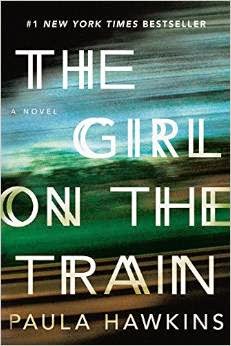
Junk Food Binge: Big Little Lies, The Rosie Project, and The Girl on the Train

Big Little Lies, The Rosie Project, and The Girl on the Train
(For those days when you don't want your brain to work too hard)

Sometimes we read books that are bad for us - sugary sweet, designed for addiction, filled with additives devoid of nutritional content, and leaving a chemically aftertaste.  I'm coming off just such a binge, and while none of these books really deserves its own post, I did spend some time reading them and ignoring my husband (sorry!)  So, without further ado, a quick blurb on why you should/should not read each.

Good/decent junk food binge - Big Little Lies, Liane Moriarty 


Has a book ever been so geared toward a book club of thirty-and-forty-somethings with small children at home and a hankering for a bottle of wine and some drama?  Although I'm not in that particular category of readers, I couldn't help but find Moriarty's story of drama mamas at kindergarten in an Australian beach town entertaining.  

Part of the hook is the structure - the story is told chronologically from the point of view of several characters in the beach-side community, but the narrative is interspersed with what might be police interviews revolving around a school fundraiser that ended in murder.  There are three mysteries at play here: who is the victim? Who is the murderer?  How did parenting five-year-olds in such a picturesque town turn deadly?

I'll admit that this intro (and the awful title!) might induce some eye rolls, and so will this book - but like I said, this is the Junk Food Binge edition.  And, of the three books in the binge, Big Little Lies might actually be the best.  It's well-paced, it's entertaining even when it's being ridiculous, its characters are more well-rounded than you might expect at first glance, and with a light touch, it tackles some more serious issues: bullying, marriage and parenting challenges, domestic violence, sexual abuse, child slavery... I suppose that makes it sound like a deeper and more depressing book than it really is.  It's not as heavy as all that.  It's just a good page-turner and often, surprisingly funny.  And I only half-guessed the ending.  Call it, Cheetos, made with Real Cheese!

Cotton candy junk food binge - The Rosie Project, Graeme Simsion


This book is really just delightful.  Read it in 24 hours, giggle to yourself (or out loud), sigh or groan a little, and then go give someone a kiss.  I read it by a fireplace in Vermont and then on the long drive home, and that might be why I just glow when I write about it.  It's nothing special, but it definitely delivers that cotton candy sparkle on your tongue - highly enjoyable for just a moment, and ultimately forgettable.

The protagonist and narrator is an Australian professor who must be on the autism spectrum, who embarks on a hunt for a wife the way you would construct an anthropology experiment.  (Is it just me, or - including The Slap, both the worthwhile book and now a TV series, The Rosie Project, and Big Little Lies - aren't we getting much more Australian literature on this side of the world than we used to?)

Don the hapless professor is a great combination of hilarious, (cotton candy) sweet, and infuriating.  He's an unlikely hero that you just want to root for, as he shifts his focus from trying to find the perfect mate or companion, to helping his new friend Rosie in her quest to find her biological father.

The whole story is a bit ridiculous, especially some of the travel anecdotes and the completely unrealistic ending.  But goodness, did I smile the entire time I was reading - this is as romantic comedy as it gets.  (Just wait, because I'm fairly sure a movie and a sequel are in the works.)

"Can I get a time refund" junk food binge - Girl on the Train, Paula Hawkins


Pretty please, can I find whichever publishing/marketing maven called this "The New Gone Girl!" and give them a well-deserved smack?  I may be in the minority here, given how many people I see reading this (yes, on the train) and its spot on bestseller lists.  But I HATED almost every minute of this book.

One of the narrators is a drunk, overweight woman named Rachel, whose marriage has collapsed, who has lost her job, and who rides the train to and from London on a daily basis, pretending that she's a commuter, and stalking her ex in the house where she used to live.  To say that she is an unlikable narrator, however pitiable, is an understatement.  Who wants to spend precious junk food calories on this person?

Another narrator is a beautiful blond woman with secrets, who - you guessed it! - has disappeared.  Is she dead?  Did her husband do it?  If you're Gillian Flynn, you're feeling pretty happy because Paula Hawkins tried to cheaply rip off some of your gimmicks, and made you look fantastic by comparison.  (If you're Gillian Flynn, you're also pretty happy because you're talented, beautiful, and swimming in money.)

One more detestable narrator here - the woman who slept with, and then married, Rachel's husband.  Ugh.

I would be afraid of giving away too much of the ending by going on, but suffice it to say that I NEVER guess the twist, but this one became pretty obvious to me as I went on.  I will admit that the book does become addictive.  But - an obvious public service announcement here - just because something is addictive does not mean that it has any redeeming qualities.  SKIP!

P.S. - I just bought 3 very educational-sounding, non-fiction books.  Maybe this will make up for my junk food diet!

Tuesday, April 7, 2015

Growing Up Chimp: We Are All Completely Beside Ourselves

We Are All Completely Beside Ourselves, Karen Joy Fowler


Fast Facts
  • Shockingly, inspired by the story of a 1930's scientist couple who tried to raise a baby chimpanzee side-by-side with their human daughter
  • Winner of the PEN/Faulkner Award for fiction
  • Short-listed for the 2014 Man Booker Prize
    • Note: I tried to read The Narrow Road to the Deep North, which beat Fowler's book for the Man Booker last year.  Couldn't get past page 25.
  • Kindle users like me (who also haven't read this post) can delight in not catching the cover art, and not reading the back of the book for the "spoiler" about the identity of protagonist Rosemary's sister, Fern
  • 320 pages
  • A definite recommend, though not an absolute favorite
The Big Reveal

You'll start off thinking that you're reading about a college student's rebellion phase and normal resentment towards her parents.  Relatable perhaps, well-written and often funny to be sure, and somewhat interesting - but wait for the twist.

Fowler drops in little hints of family dysfunction and mystery into the beginning of the book - which starts in the middle chronologically (a bit heavy-handed, but still a good structural device to keep the intrigue alive.)   Examples of Fowler's little hints, signaling that something is "off": siblings that keep disappearing, and family homes that keep growing smaller to accommodate the disappearances.  Rosemary being sent away to stay with her grandparents after some unnamed trauma.  Constant references to how chatty Rosemary was as a child, and her struggle to fit in with her brother and with social groups.  Growing up at a farmhouse that people assume has an electrified lawn.

I'll admit, the beginning of this book didn't exactly have me hooked - but keeping the delicious secret about Rosemary's family for the first 75 pages or so made the big reveal one of the best parts of the reading experience.  That is, if you didn't pay attention to the cover art or book summary before starting the novel (which I'd seriously recommend!)

Making Your Parents Look Like Pros

Rosemary's resentment at her parents is far more well-founded than that of most young(ish) adults.  It turns out that, in an effort to (as her mother puts it) make Rosemary's life "extraordinary", Rosemary's parents decide to raise Rosemary side-by-side with Fern, a chimpanzee, from when Rosemary is a few months old until she is five years old.

The goal, aside from giving Rosemary this "extraordinary" life, is to have graduate students at the university where Rosemary's father is a professor study Rosemary and Fern, like one big science project, to publish about the effect they're having on one another's development.  And of course, Rosemary's father hopes to propel his academic career to a level of achievement that will merit the New York Times writing a respectful obituary about him.

It's no wonder Rosemary thinks her parents are The Worst.  Even more appalling, though, are the real-life examples that Fowler provides during the novel, of other chimps raised as "human", and the difficult, depressing consequences.

At Last, the Beginning and the End

As previously mentioned, the story starts in the narrative middle with Rosemary's disorderly conduct arrest in college, related to her soon-to-be friend Harlow's animal-like behavior in a cafeteria.  College Rosemary's antics are, in my opinion, the least interesting part of the book.

The beginning section, which comes next, explains Rosemary's strange childhood, and the circumstances leading to Fern's disappearance.  This is the part of the novel that makes it worth the time and effort - and it is told skillfully and beautifully in vignettes and flashes of questionable memory, given that we are relying on the recollections of a traumatized adult, reflecting on her first five years of life.

Finally, as Rosemary confronts the effects of her early upbringing and tries to find her family and herself in the process, Fowler weaves in bigger moral questions about animal rights, animal treatment, and the ways that these topics relate to human rights and the people we lock away in cages.  
The result is a fascinating story that tackles important issues, and lingers long after the last page has been read.

Sunday, March 1, 2015

Getting your Downton Abbey fix in print: The Paying Guests

The Paying Guests, Sarah Waters


Fast Facts
  • Set in 1920's London, featuring a "spinster" in her mid-twenties and her mother, forced to rent out rooms in their aristocratic home due to financial hardship
  • Gets off to a slow start, followed by an addictive and unexpected middle section full of twists and turns, and a somewhat plodding, but satisfying, ending
  • 576 pages
  • Featured on Best of 2014 book lists by the New York Times and NPR
  • Historical fiction so convincing in tone and detail that it's hard to believe it was only published last fall
My second Sarah Waters novel

I didn't remember having read anything by Sarah Waters before when I saw The Paying Guests on top 2014 book lists and added it to my Kindle shelf.  It wasn't until the protagonist, Frances, reveals her sexual past and embarks on a steamy lesbian love affair that I remembered reading Fingersmith, another popular Waters novel, with my book club a few years ago.  (Mainstream literature clearly needs more lesbian protagonists).

I didn't remember too many details of the Fingersmith plot, other than that it was historical fiction and also featured a lot of sex - but I do remember starting off thinking that I wasn't sure I liked it, and then being completely unable to put it down.  The Paying Guests sneaks up on you in much the same way.

Premise and build-up

The beginning of The Paying Guests sets up the sad fortunes of Frances and her mother, who, having lost Frances' brothers in the war and Frances' father shortly thereafter, must endure the shame of opening their home - to strangers! - of the lowly clerk working class! - for money!  There are many details involving Frances' efforts to keep up appearances in the home, cook very British-sounding meals for her mother, and adjust to the young couple, Leonard and Lillian Barber, who move in upstairs.

This starts to feel tiresome, and I nearly gave up (the way I've done with Downton Abbey, given long breaks between seasons and not having my mom nearby to binge it with.)  But a little perseverance paid off with an immensely enjoyable read, with pacing that broke into a trot and then a sprint, seemingly out of nowhere.

The Payoff

One minute you're reading about the many ways Frances cleans the floorboards, and then - with masterful build - you learn about all of the tension and drama bubbling under the dull, genteel surface.  

Secret affairs, forbidden sex, lies and intrigue, crimes of passion, mystery and mayhem - suddenly, this book has it all.

There are enough unexpected (at least, to me) turns that it would be wrong for me to provide any more detail.  But I can say that this novel is a great deal steamier and suspenseful than Downton, and draws you in completely.

Recommendation - read it!

I will admit, there were a couple of flourishes toward the end that I didn't love, including a man in a mackintosh so overused in literature that my eyes nearly rolled out of my head, and trial scenes that felt interminable.

But otherwise, The Paying Guests is massively entertaining and a nearly perfect period drama.  Waters has done a truly impressive job on the research and delivery - Frances' world felt intensely present and real, reflecting the social upheaval caused by the end of the war, and illuminating Frances' views of her own feminism and sexuality in the context of a culture unwilling to accept either.  

Though a bit on the long side, I would absolutely recommend The Paying Guests, particularly while you're trapped inside by this snowy weather.  Just set yourself up by a roaring fireplace with a cup of tea, and imagine all the characters with the faces of Ladies Violet, Mary, and Edith (the men are all just bit players, anyhow).

Sunday, February 1, 2015

Companion to Ann Patchett's "Truth and Beauty": Autobiography of a Face

Autobiography of a Face, Lucy Grealy


Fast Facts
  • Autobiography of a Face is a memoir recounting Grealy's cancer diagnosis at age nine, the seemingly endless treatments and surgeries that followed, and Grealy's introspection and growth as she ultimately comes to terms with her appearance and her own definition of beauty
  • The author, featured here:


  • 260 pages, painfully sad but beautifully written - Grealy's background as a poet shines through
  • Grealy's friendship with author Ann Patchett was the subject of Patchett's own memoir, Truth and Beauty
  • A show case for Grealy's immense talent, highlighting our immense literary loss
Wanting to be Ann Patchett's best friend

Ann Patchett is one of my favorite writers, but I had never read her non-fiction until a year ago, when I stumbled upon someone's battered copy of Truth and Beauty in my apartment building's communal laundry room.  (Moving into an apartment building with my own washer/dryer has its benefits, but I have to say, I miss using laundry as an excuse to raid the lending library!)

I read Truth and Beauty over Christmas 2013,  in a Vermont hotel that pre-dates American independence (featuring the most comfortable beds known to man).  The snow was falling, my husband was snoring, and I read until my eyes were red and bleary, crying over Ann and Lucy.  

Does platonic friendship that intuitive, deep, and all-encompassing, really exist?  Why don't Ann Patchett and I have that same relationship, when I know in my heart of hearts that we should?  Is it wrong to feel jealous when the ending is such a tragic, heart-wrenching waste?  Just look at the two of them, rubbing it in all our faces.

Patchett's title is lifted from one of the chapters of Autobiography of a Face, and Truth and Beauty describes the publication of Grealy's memoir, the whirlwind press and Lucy's Today show appearance and celebrity dates that followed.  I put it on my "to read" list definitively with a recommendation from my best friend Ali (my memoir/non-fiction connoisseur,) and I finally bought it over Christmas 2014.


Summary of an Autobiography

Lucy Grealy is nine years old when she is hit in the face during dodgeball, and experiences such disproportionate pain in her jaw that she begins a series of doctor's visits that culminate in a diagnosis of Ewing's sarcoma.  It isn't until years later that she learns that this ailment was a rare form of bone cancer.

"I had cancer?" she asks her family, as someone in the kitchen dated an event as something that had happened "before Lucy had cancer."  "Of course you did, fool, what did you think you had?"  "I thought I had a Ewing's sarcoma."  "And what on earth do you think that is?"

A great deal of the book is devoted to Grealy's surgeries, some to remove the cancer and seemingly many more to reconstruct Grealy's jaw.  The aftermath of Grealy's illness is just as poignant as the frightening first chapters.  She grapples with personal loss and finding identity, as teenagers do, with the added burden that she barely recognizes the disfigured face in the mirror as her own.

Halloween becomes her favorite holiday, and a recurring theme of the book: she only truly feels free from the oppression of judgment behind a costume mask.  Her relationship to pain is complex, but no less complex than her relationship to body image and her struggles with leering classmates in the cruel jungle of middle and high school.

Gladly, the memoir ends on a positive note.  It feels as though Grealy's ability to find and create beauty in literature, poetry, college and graduate school friendships, and her hope that the next surgery will yield the appearance she wants, seem to leave her with some measure of personal peace.

Final Thoughts

The traumas in this memoir are hard to wrap one's head around, but Grealy's prose manages to still feel beautiful and even, incredibly at times, light.

Grealy crystallizes her experience so perfectly through her own child eyes that even though each paragraph is heartbreaking, there is also a sense that each hospital visit and each horrific round of chemotherapy is just her reality.  She is a young girl, and this trouble-maker roaming of hospital wings and going through surgery after surgery is simply what her childhood is - she knows no different.

Knowing from Truth and Beauty that Grealy later fell into surgery addiction and ultimately, heroin addiction, somewhat hampered my reading of Autobiography.  Still, I loved Grealy's insights as she grows up, gains self-awareness, and reflects on truth and beauty in light of her uniquely challenging experiences.